What a plan holds
- Every part, with its material and grain direction
- Which face is on show
- Connectors and hardware
- A box plan with weight limits
- Assembly steps
- An inspection plan and a load rating
- Site access and the delivery slot
Sheet & Slot
A plan for small automated workshops that cut custom wooden furniture from sheets, box the parts and deliver them the next day.
Order custom furniture today and it arrives in eight to twelve weeks.
Almost none of that is cutting. A router gets through a sheet of plywood in ten to fifteen minutes. The weeks go to quoting, finishing and freight.
A Sheet & Slot cell removes all three. It prices from a published rate card, stocks sheets that arrive already finished, and stands a short drive from the customer.
You design the piece with an agent. The nearest cell cuts it, kits it, boxes it and brings it to your door in a booked slot, as early as tomorrow.
What follows is the plan: what a cell is, what it costs and what it earns.
A cell is a 400 to 600 m² unit with a roller door, one router and two or three people a shift. It cuts, sorts, kits, boxes and delivers. It never applies a finish, because coatings take days to cure.
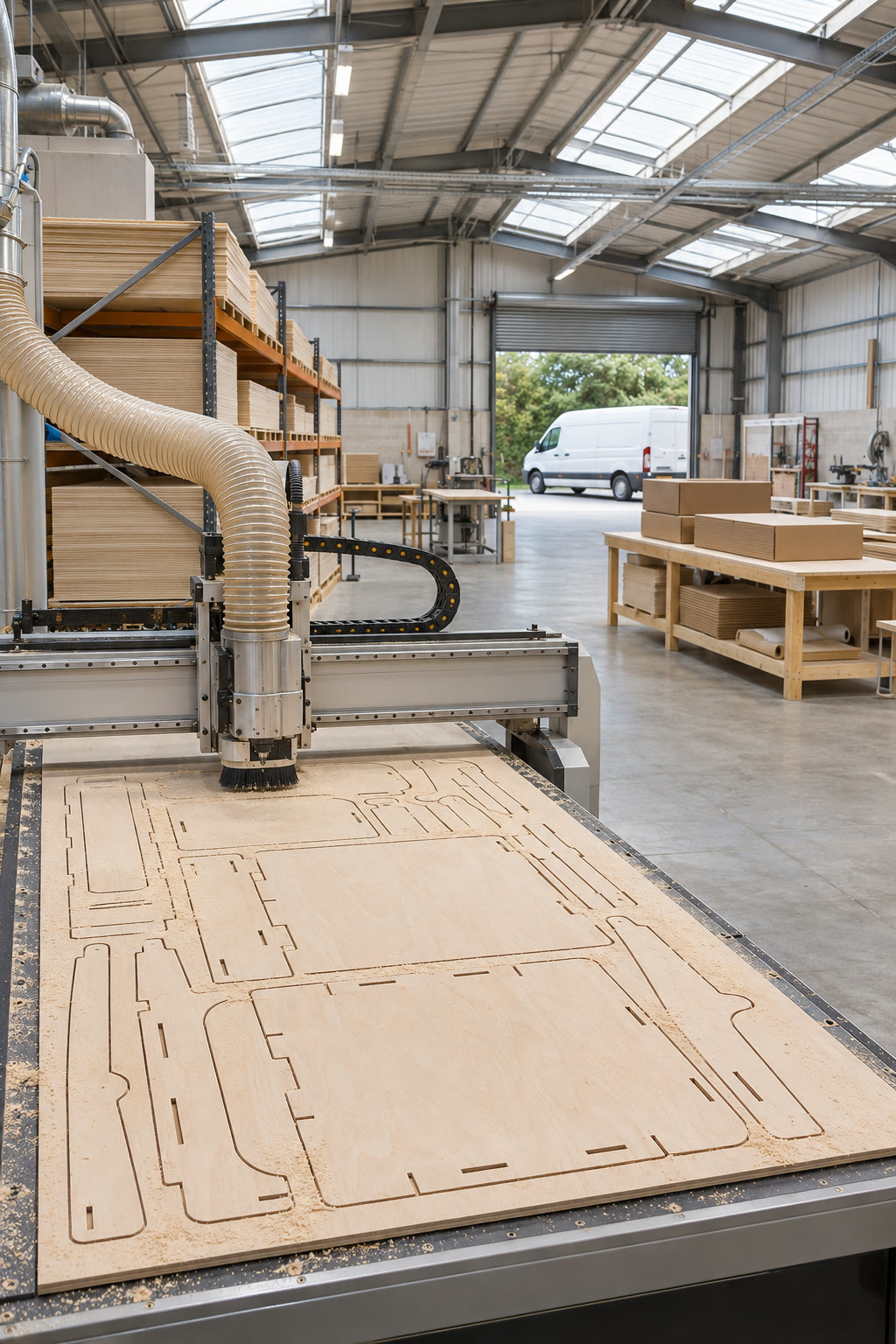
A bookcase, two sheets
Sample timetable
Order to furnitureunder 25 hours
Outdoor pieces take a second, cheaper lane. They are mostly boards and slats, so durable timber is cut to length and drilled, then kitted and boxed the same way.
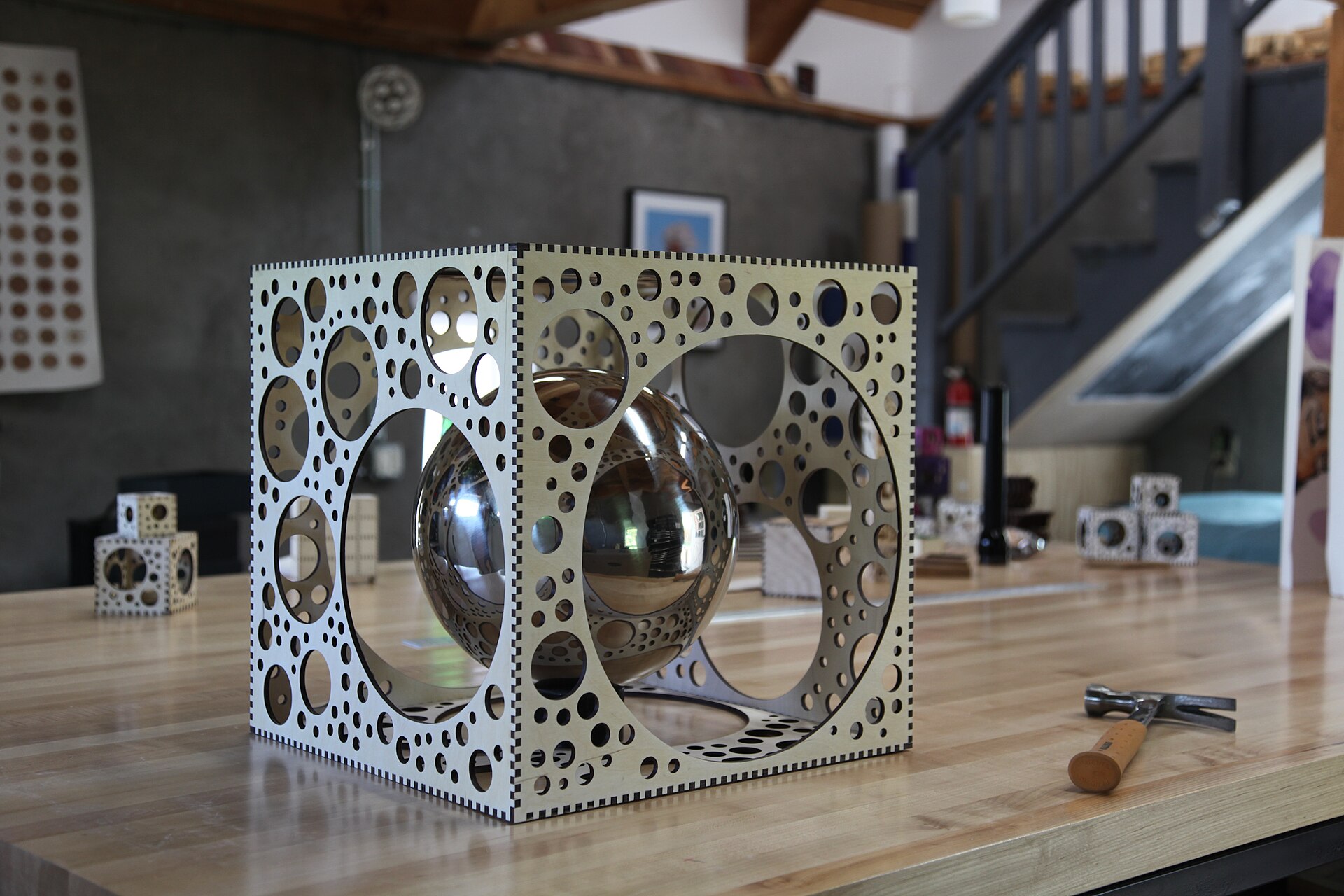
A plan describes parts and leaves the cutting to the cell, for two reasons. The cell fits parts from several orders onto one sheet, which is the main lever on material cost. And plywood thickness varies by batch, so the cell measures each delivery and adjusts every slot as it cuts.
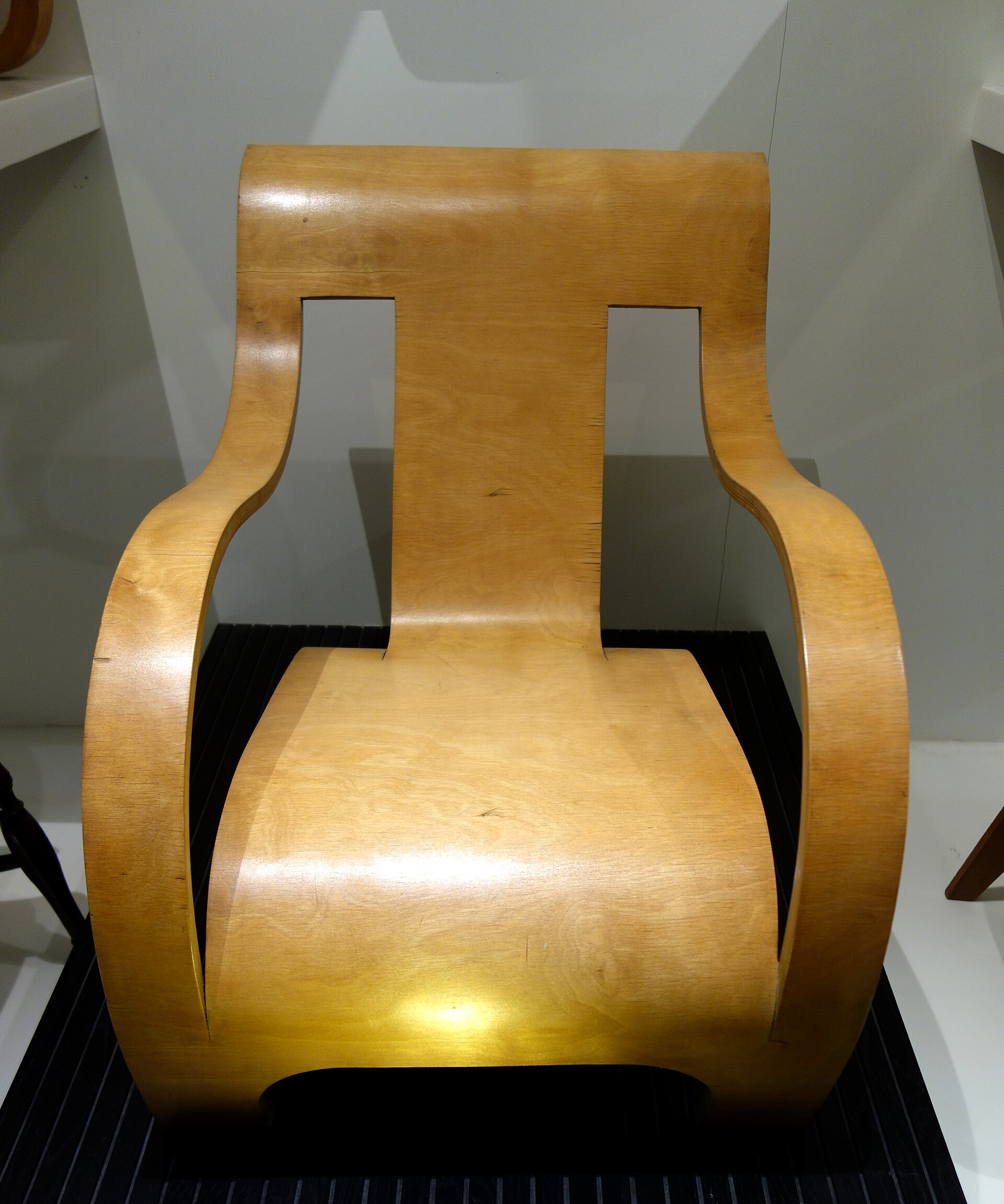
Minimal assembly is a design rule. Each cell fits one connector system before boxing, and every piece must go together in under fifteen minutes with one tool at most.
The agent and the cell run the same checker. A plan that passes is a plan any matching cell can make.
The machine at the centre is ordinary. Cabinet shops already cut one-off jobs on routers that load, label and offload their own sheets.
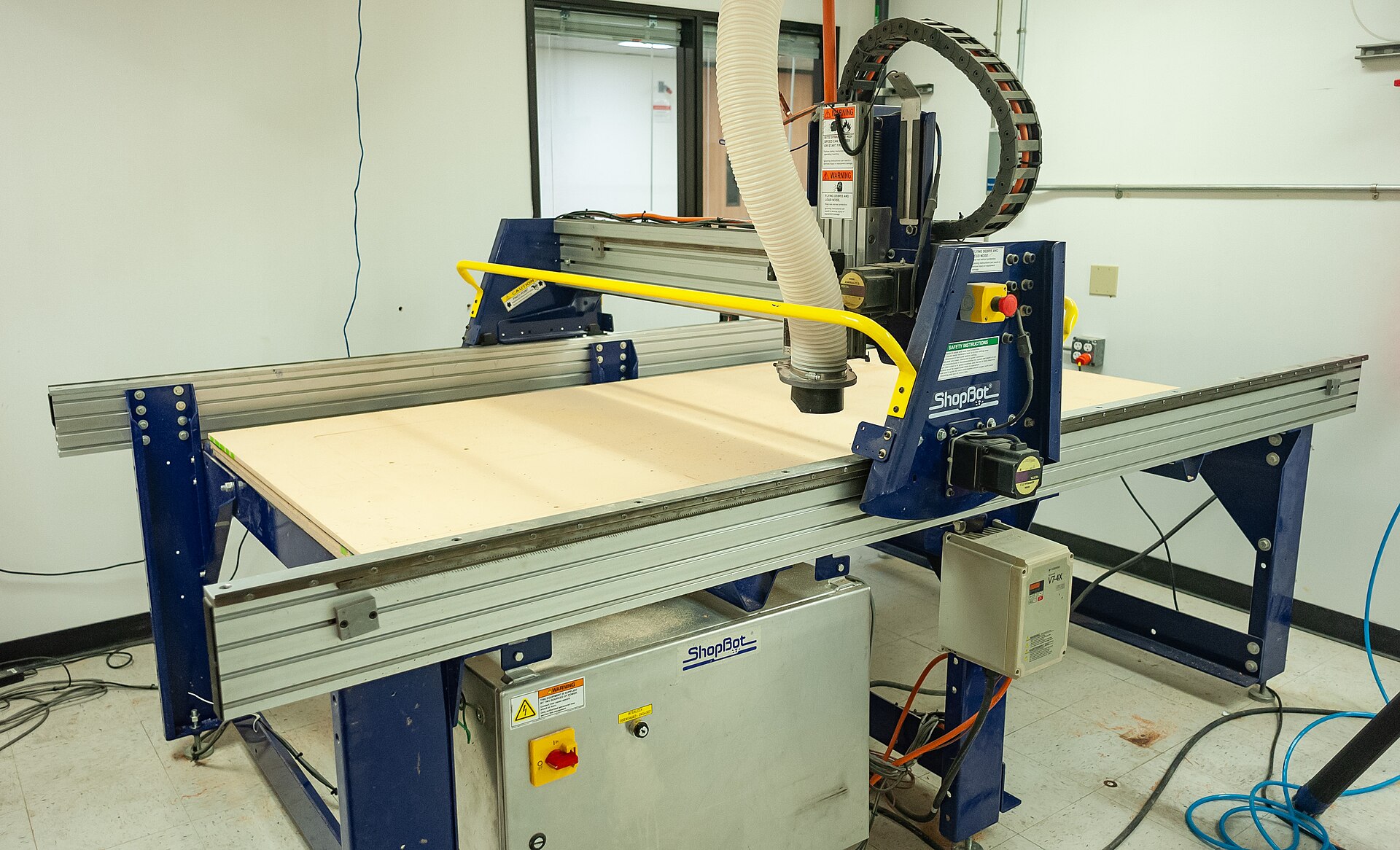
A whole cell$400,000 to $800,000
Move any figure. The sheets below are one day of work at the volume you set.
sheets and orders a day.
Profit a year
Cell profit before platform, marketing and tax, at % of revenue.
| Order price | $700 |
|---|---|
| Sheets | $240 |
| Hardware and box | $30 |
| Card fee | $21 |
| Delivery | $50 |
| People | $101 |
| Rent and other fixed costs | $50 |
| Equipment | $22 |
| Left over | $186 |
Revenue a year
Breaks even at
Equipment paid back in
Every default is an estimate made for this plan and none is a quote. People in the cell start at three and grow by one for every four daily orders unless you set the number yourself.
Only for pieces cut from prefinished sheets and ordered before late morning. The standard promise is a booked slot from tomorrow. Someone has to be home for furniture anyway, and a day's notice lets the cell fill every sheet.
It runs on the second lane, in thermally modified or acetylated timber. Durability claims need weathering tests before any long warranty is offered.
Whoever designs and makes it, which here is one business. That is why the agent works inside furniture families that were physically load-tested, and why tall storage follows tip-over rules. Take legal advice early.
In part. Opendesk sent open designs to local workshops and quoted one to four weeks, with each maker pricing each job. Tylko sells parametric shelving made by production partners. Neither paired a fixed rate card with stocked materials and next-day local delivery.
Not the router, which can cut more than fifteen orders in a shift. The limits are the people sorting and packing, and the number of delivery slots in a day.
Yes. Recycled plastic sheet cuts on the same router, so it would be one more stocked material.
No equipment yet. Have the agent draw plans for two or three furniture families, rent router time at a local cabinet shop, and sort, pack and deliver twenty to thirty real orders by hand. The minutes each order takes decide what to automate first.
Lead times of eight to twelve weeks, and one to four through a maker network: Opendesk. The £300 desk: Opendesk. Routers that load, label and offload: Thermwood, AXYZ. The used box cutter: Machineseeker. Parametric shelving: TechCrunch on Tylko. All other figures are estimates.
The workshop, the open box and the furnished room are generated concept images. The others are found pictures and none shows a Sheet & Slot cell or product. Plywood faces by Dprojects, CC0. ShopBot PRS Alpha CNC Router by Rickwashburn1, CC BY-SA 4.0. Holey cube in birch plywood by Jared Tarbell, CC BY 2.0. Armchair by Gerald Summers, photo Daderot, CC0. Stacks of timber by GeorgeHillTimber, CC BY-SA 4.0. Atelier du menuisier en meubles, photo Bulloz, Paris Musées, CC0. All via Wikimedia Commons.


